With the promise of reaching remote island locations to observe interesting animal species in their undisturbed natural habitats, we searched the local travel agencies for a Galápagos cruise. At the last minute, we found a five-day voyage and our relaxing land-based independent travel experience turned into an action-packed, all-inclusive, and guided wildlife expedition.
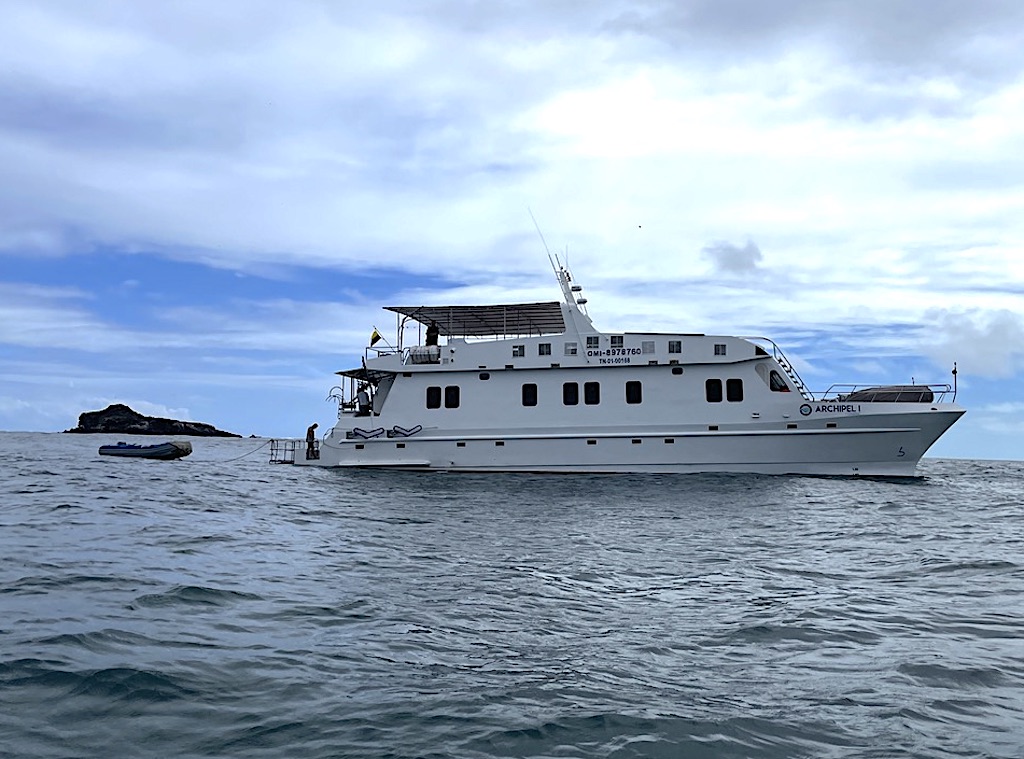
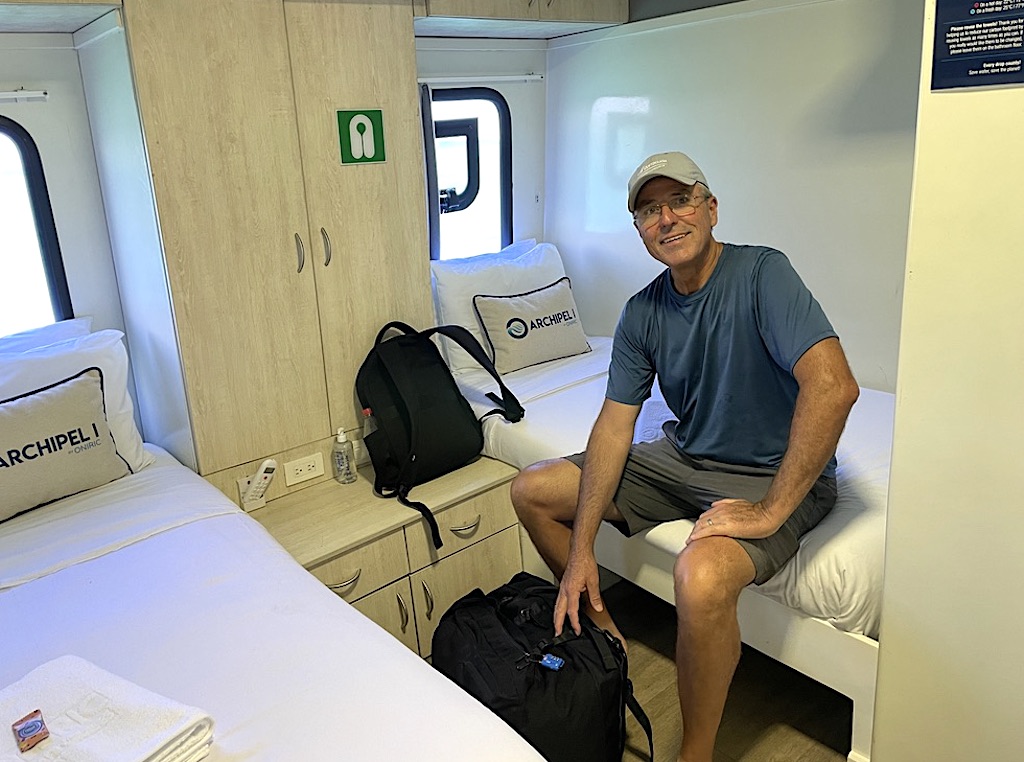
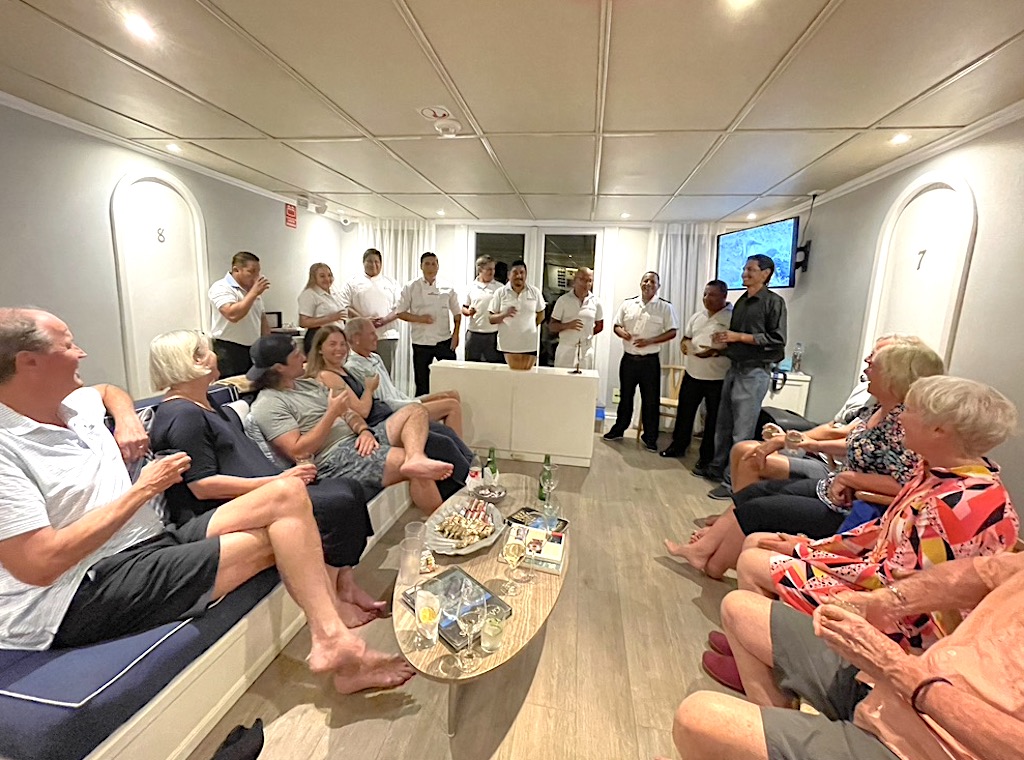
Joining fourteen other passengers, the crew of nine, and a licensed guide, we boarded the Archipel 1, an 88-foot (27 m) long motor catamaran with eight staterooms, dining room, conference area, and partially shaded sun deck. Setting off from Puerto Ayora on Santa Cruz Island, our transit included the three islands of Floreana, Española, and San Cristóbal.
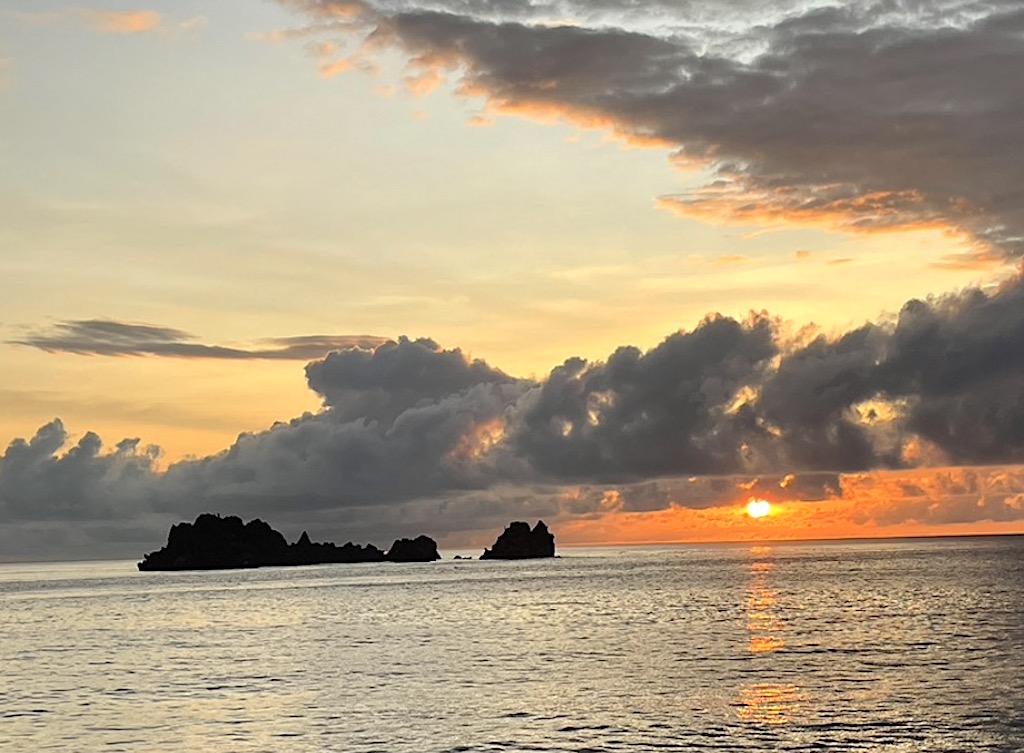
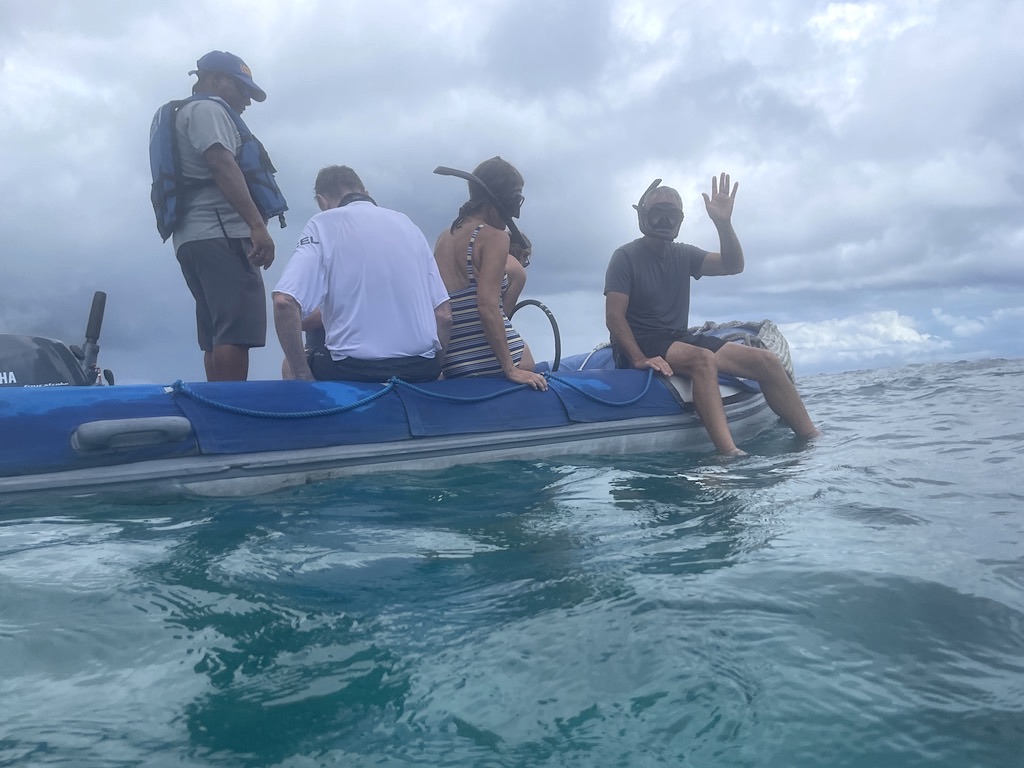
Awakening on the first day to the sunrise over the Devil’s Crown, I thought I had died and gone to heaven. My heartbeat only quickened when we plunged into the cool deep water to snorkel outside this submerged volcanic cone and then were carried across the inner crater by the strong ocean current.
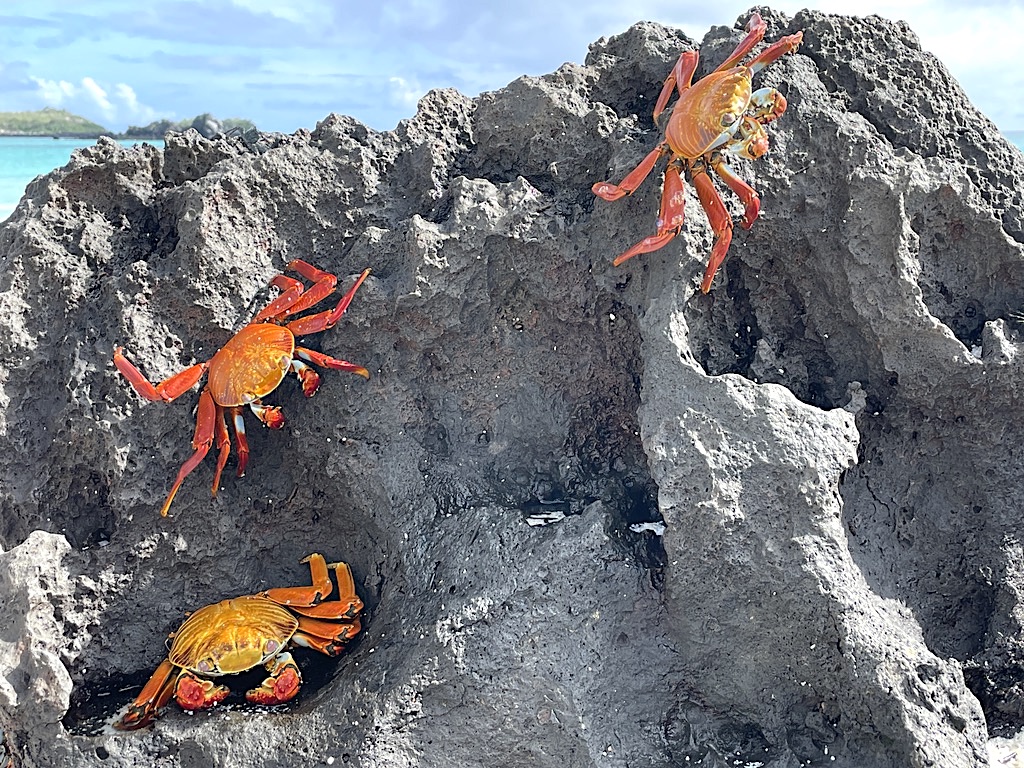

Nearby, on the rocky shoreline of Punta Cormorant on Floreana Island, we found a consortium of Sally Lightfoot crabs. These bright red crustaceans prance speedily on tiptoes to escape danger. Behind the beach, in a large brackish lagoon, we were flabbergasted to see a flamboyance of Galápagos flamingos strutting by.
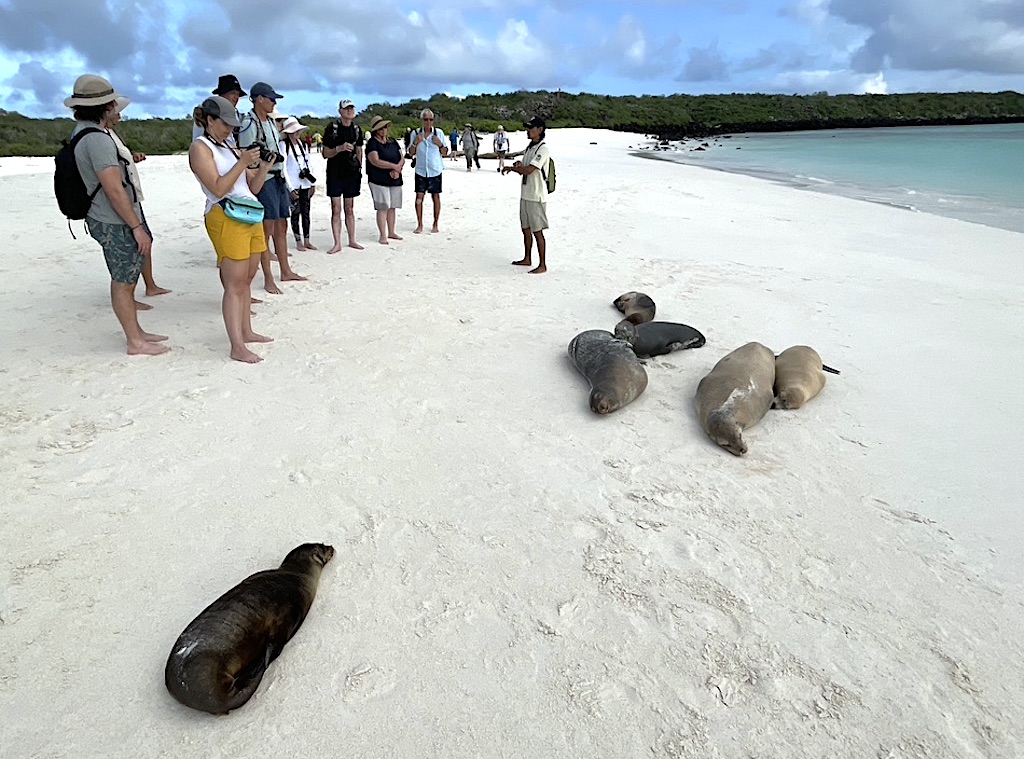
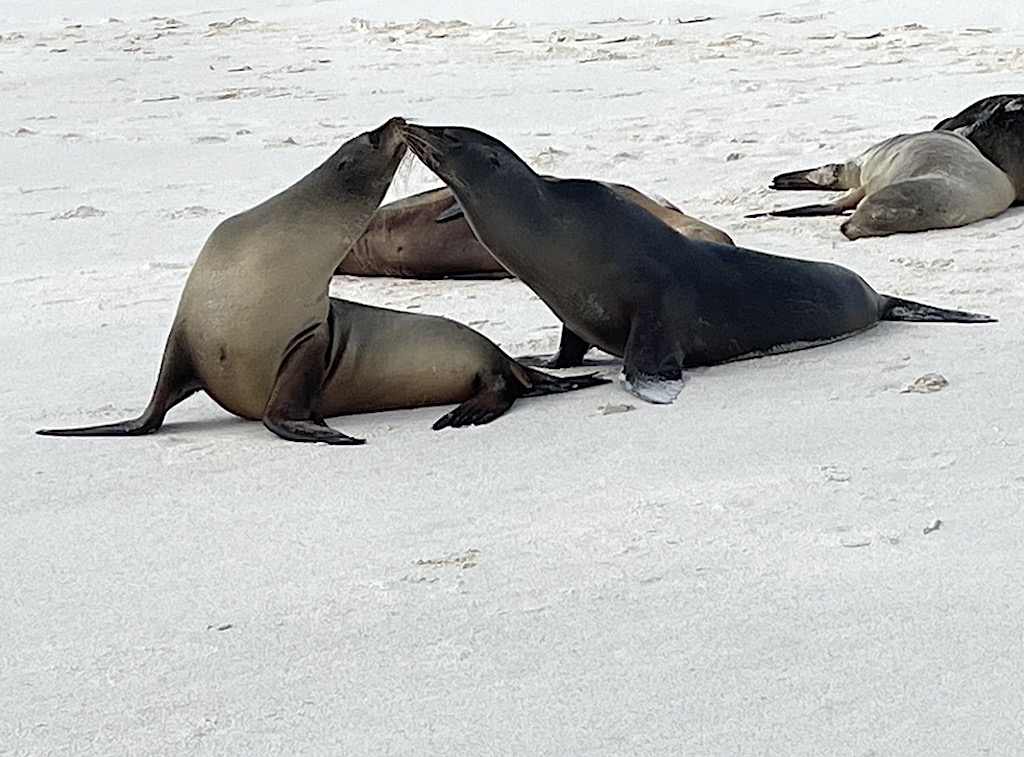
From Floreana, we cruised to Española, the southernmost of the Galápagos islands. Mooring in Bahía Gardner, our guide Andrés educated us about the Galápagos sea lion. These inquisitive marine mammals are the world’s smallest sea lion species, are endemic to the Galápagos, and are completely unafraid of humans.
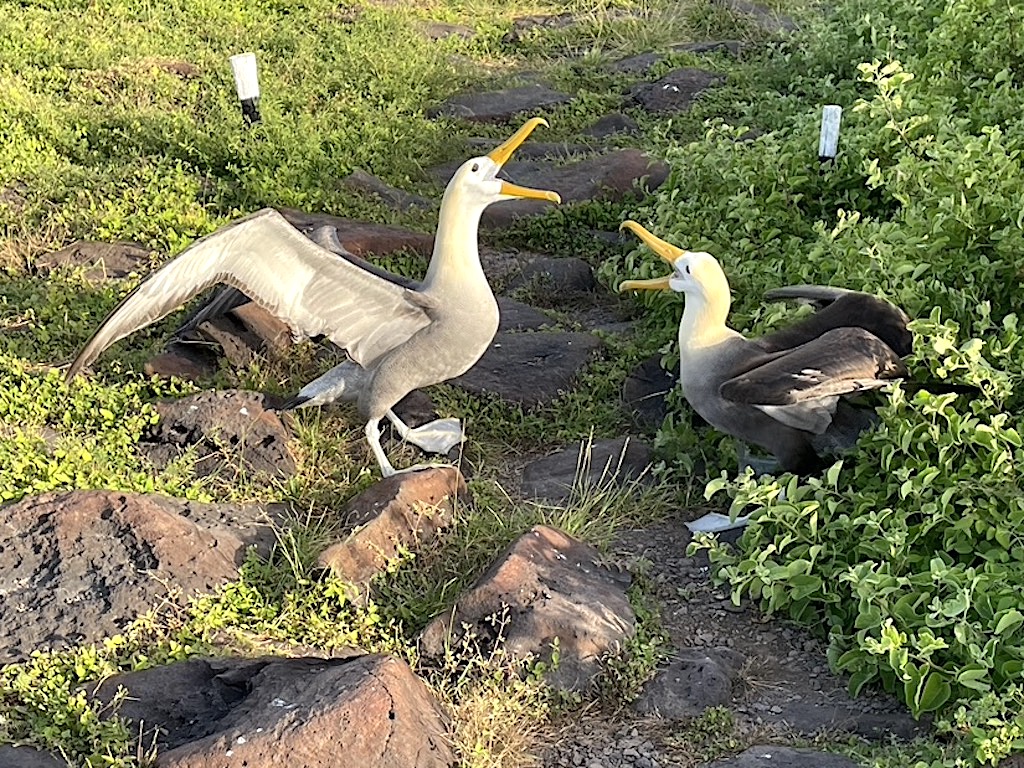
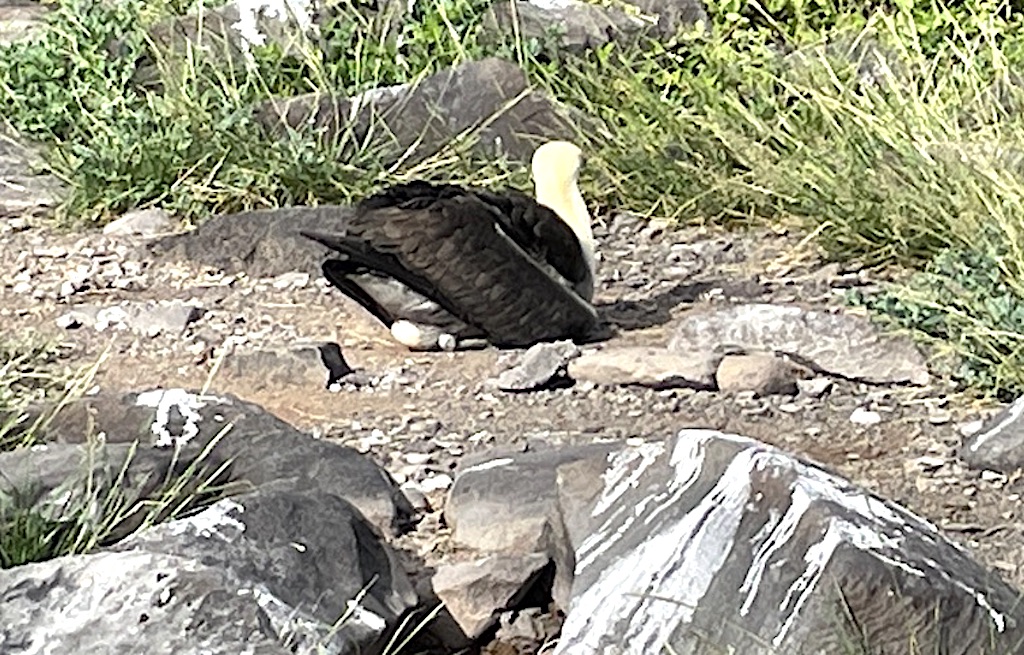
Down the coast of Española, we proceeded to Punta Suarez, the only waved albatross breeding location of earth. Even though breeding pairs mate for life, we did observe an unwedded couple performing their elusive courtship ritual of swaying and bill clacking. Once mated, the females lay only a single egg on the bare rocky ground.
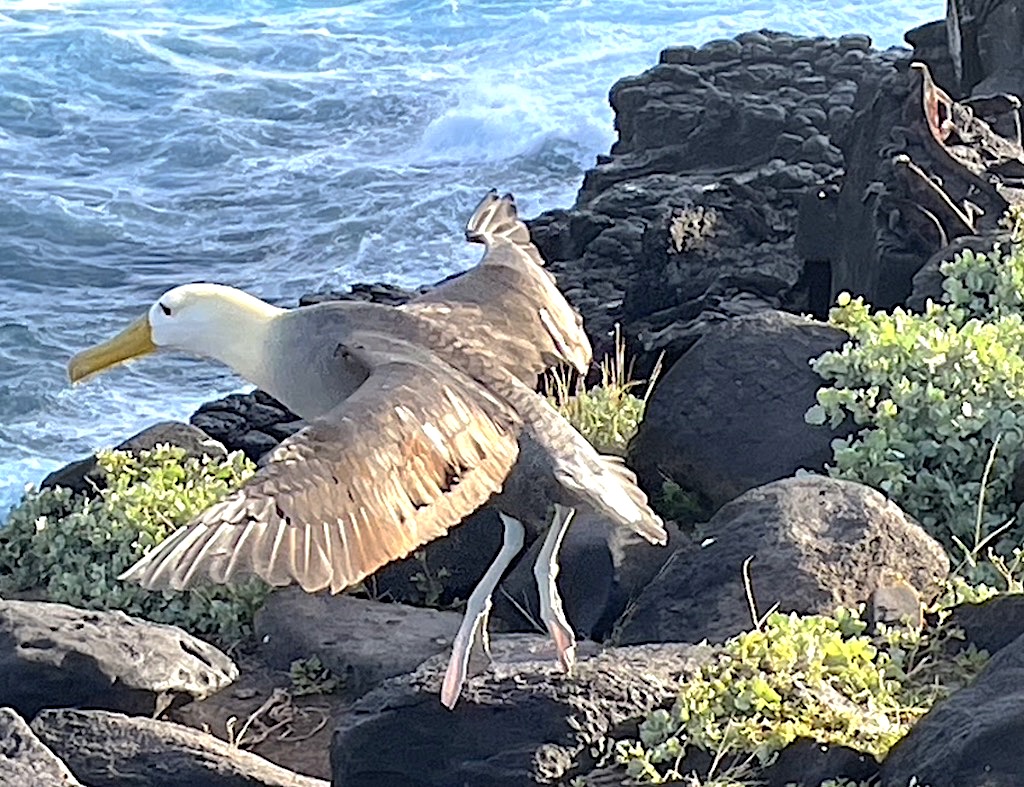
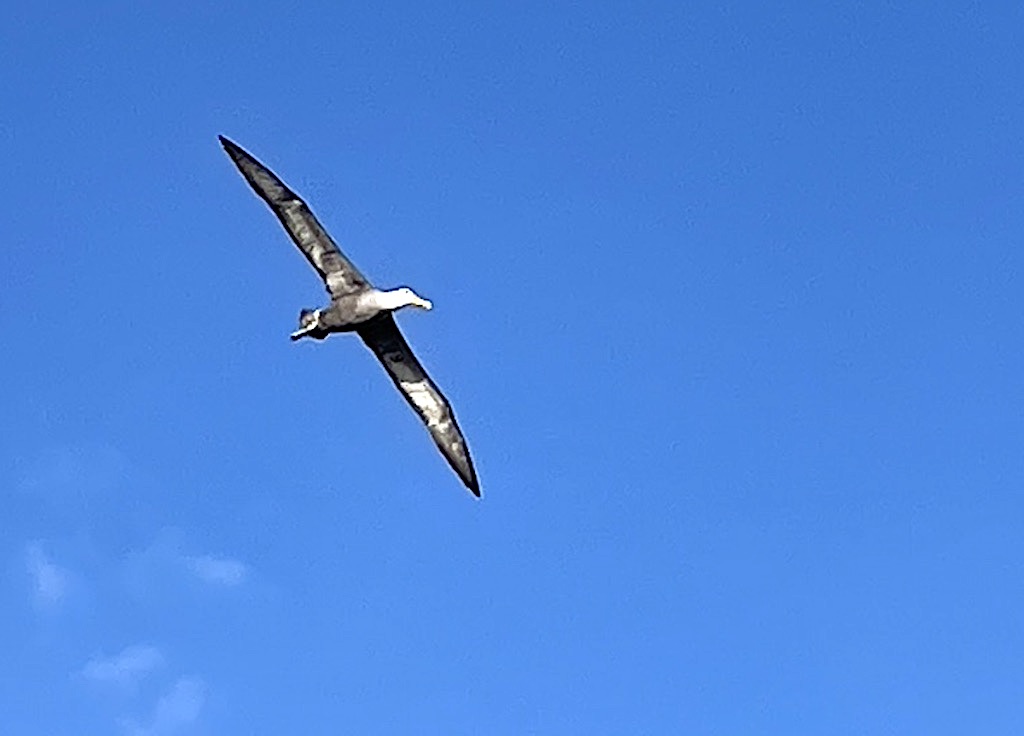
Because the waved albatross spends most of its life foraging over the open ocean, and only heads to these cliffs to mate, they are elegant in the sky but awkward on dry land. We admired their grace as they soared overhead, but had to chuckle at their tentative and ungainly take-offs and clumsy crash landings.
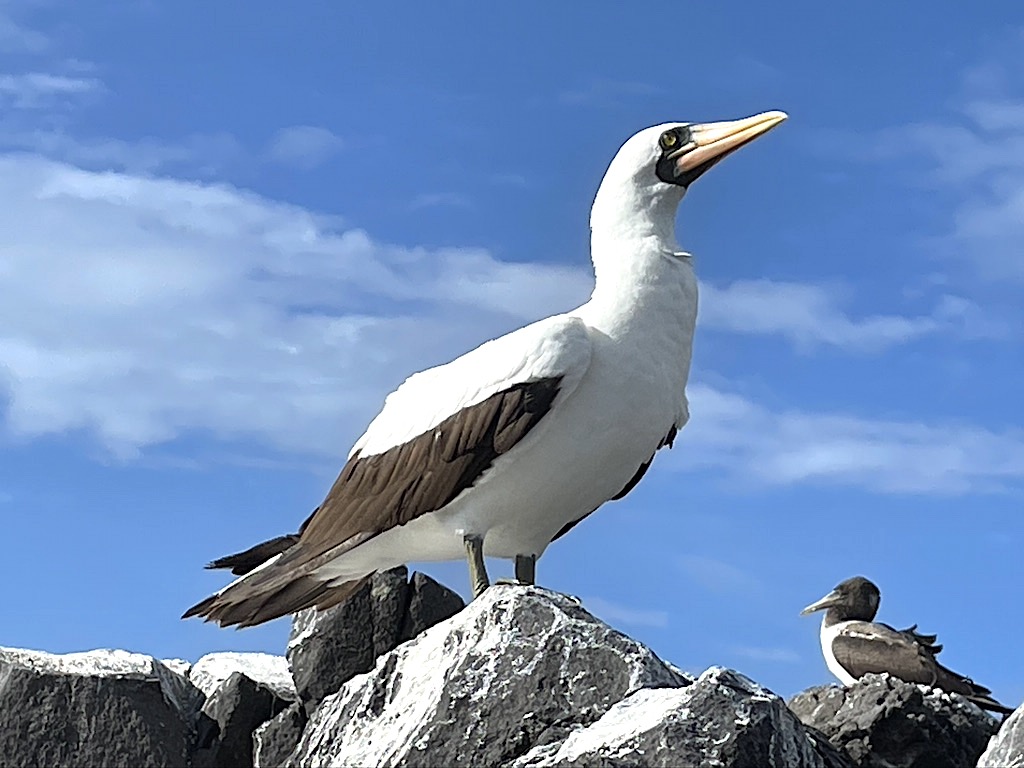

Another large attractive bird nesting on the cliffs at Punta Suarez is the Nazca booby. Instinctively but gruesomely, this species practices obligate siblicide, the parentally sanctioned killing of the younger siblings by the oldest hatchling. With this in mind, we left Española to find a more endearing member of the booby family.
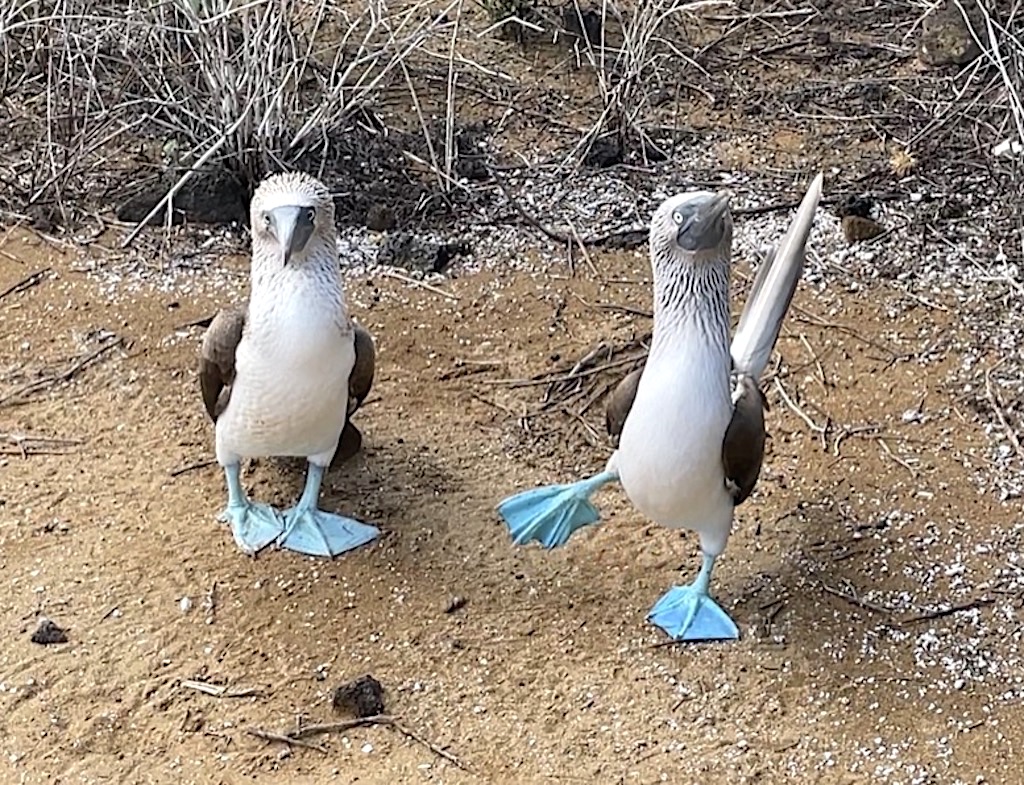
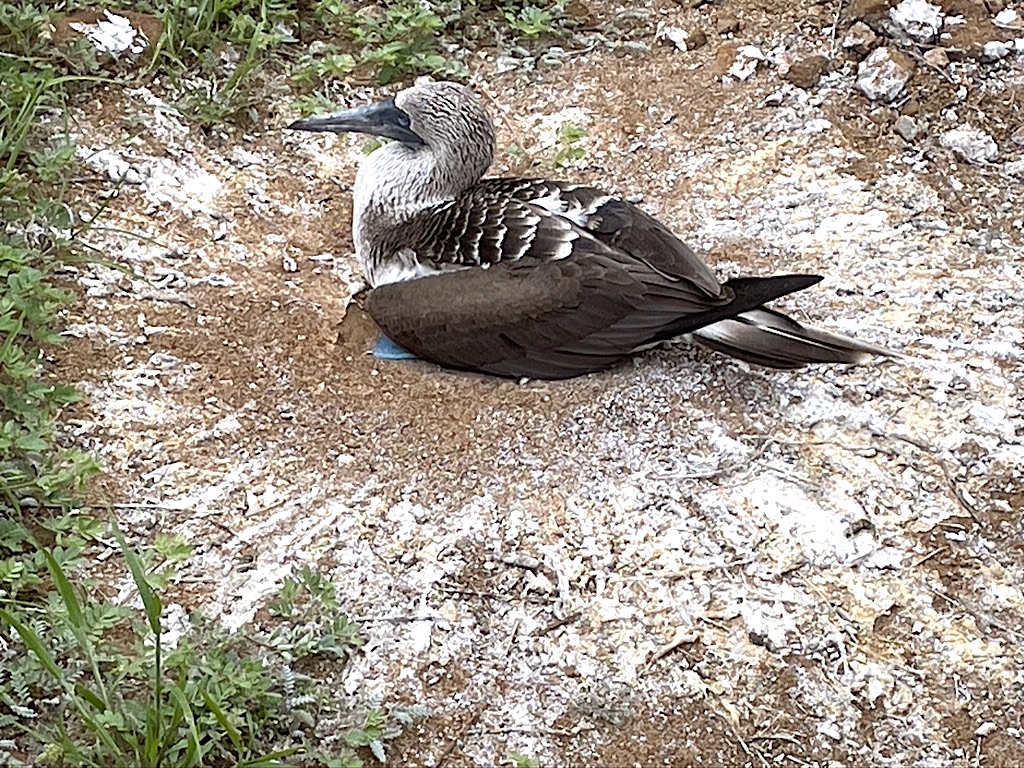
Reaching our final island of San Cristóbal, we were welcomed by a breeding group of adorable blue-footed boobies. These beloved birds proudly flaunted their distinctive blue feet, as they stomped around like drum majors to attract a mate. Once on their nests, these silly-looking boobies decorate their homes by defecating in a circle around their eggs.
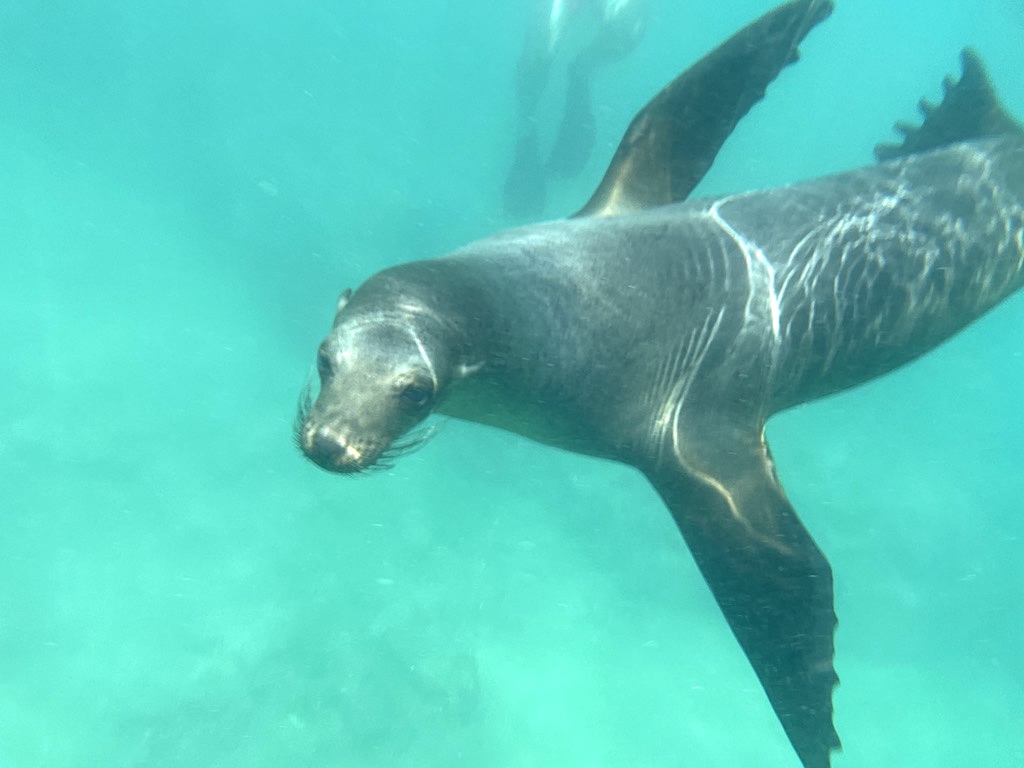

Down the coast of San Cristóbal Island, we snorkeled with a playful group of sea lion pups. In this amusing and unforgettable wildlife encounter, the fun-loving pups dove, chased each other, and swam around us in a frenzy. With their big brown eyes, they pleaded for us to stay and try to follow them under the surface.
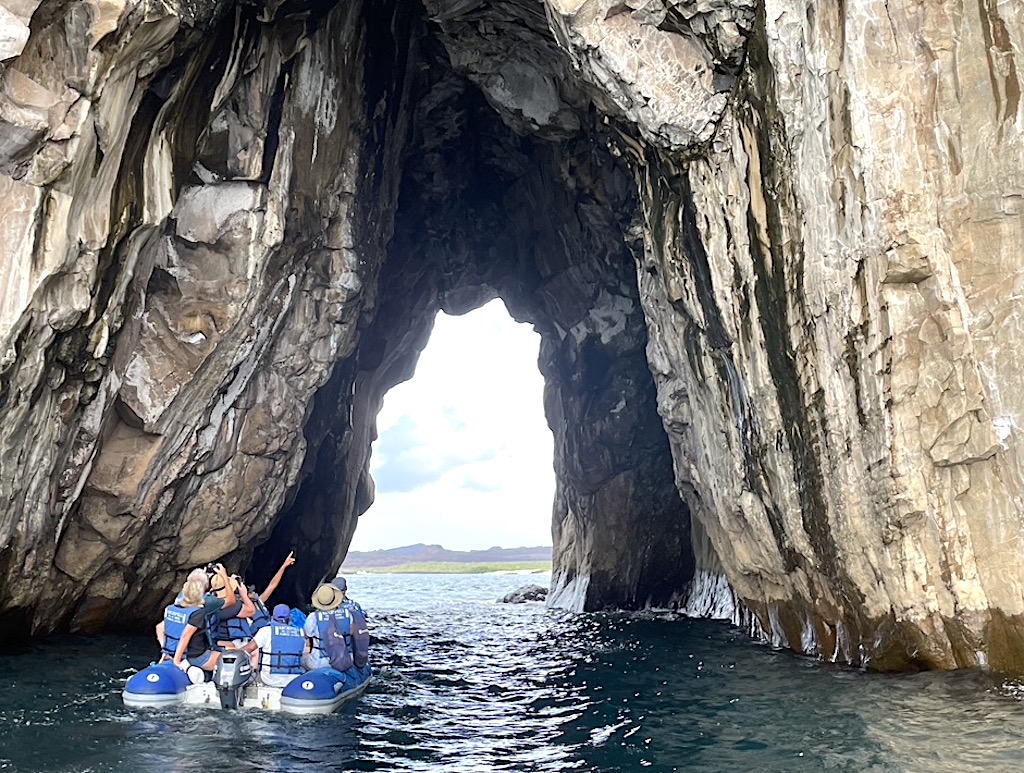
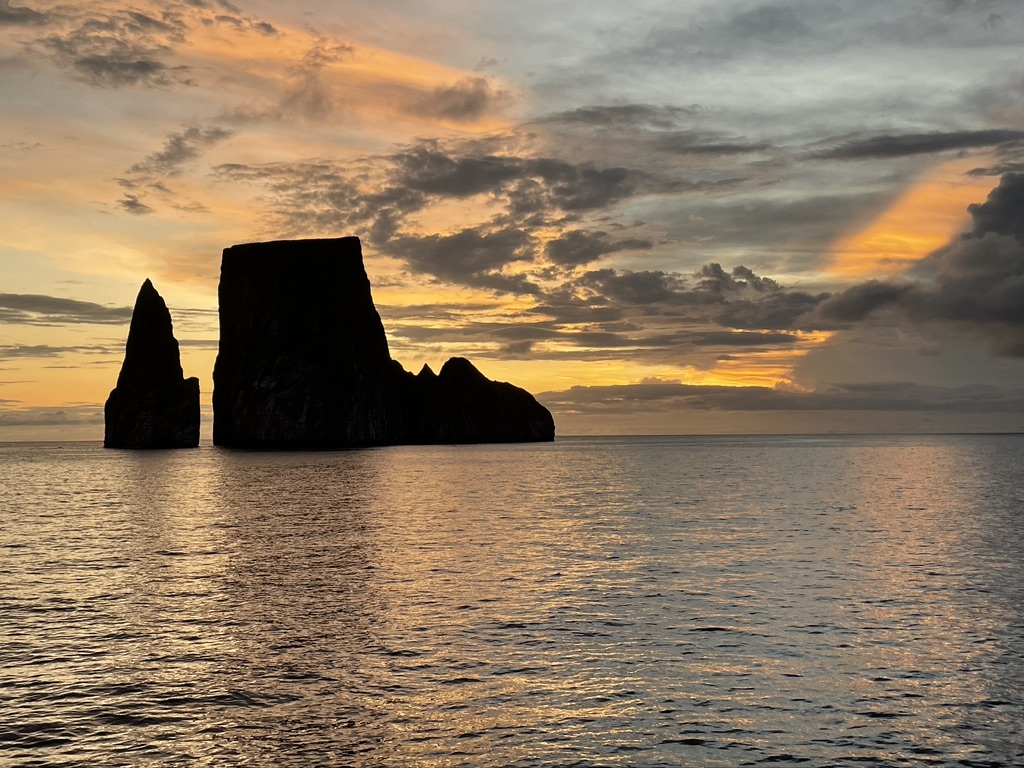
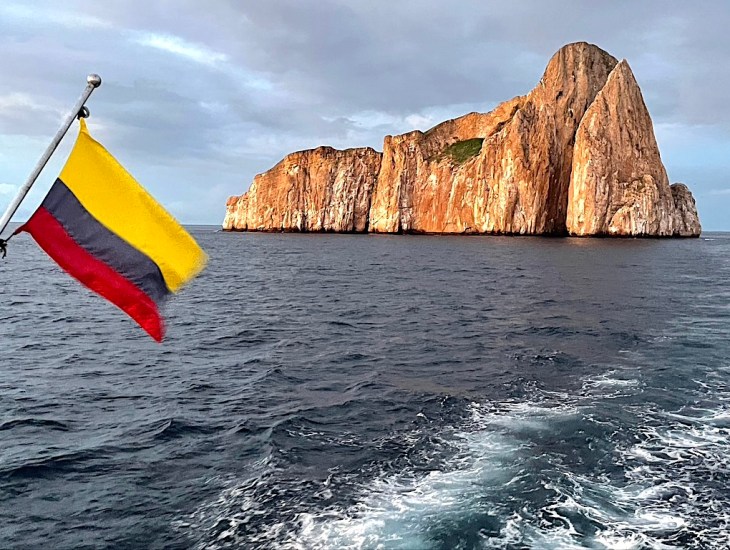
Waving goodbye to our new sea lion pals, we climbed into our panga (zodiac) for a boat tour of the sheer volcanic cliffs of the island. Composed of a thick layer of volcanic ash, the eroding cliff faces form arched caves, towing cathedrals, and offshore remnant islands, like the iconic Kicker Rock.
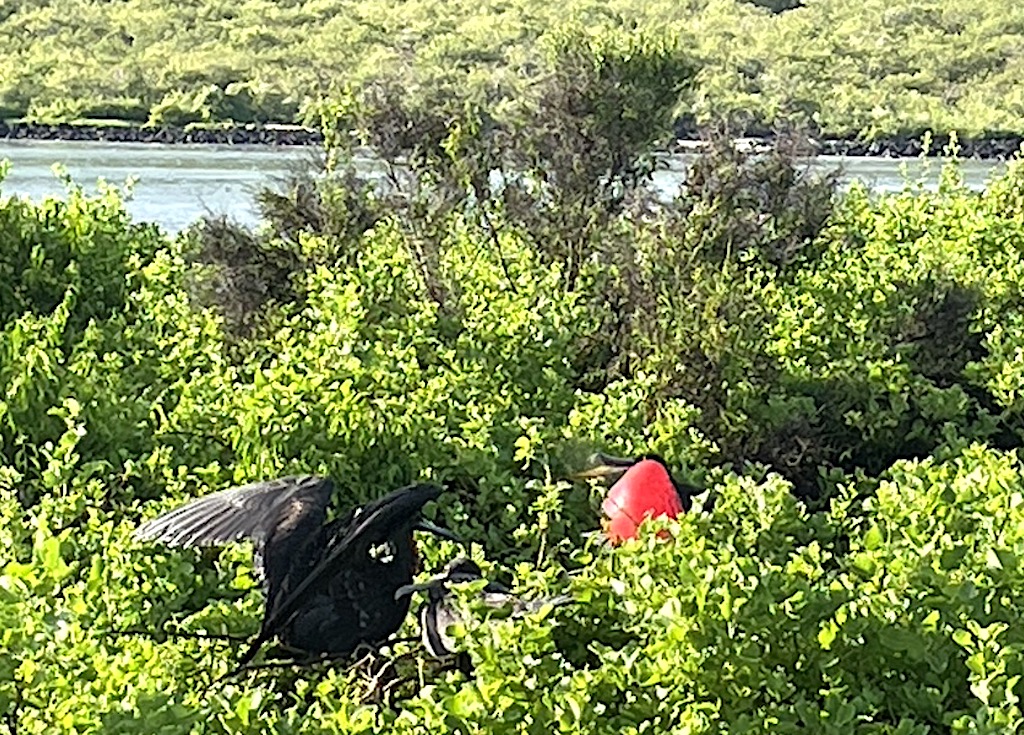
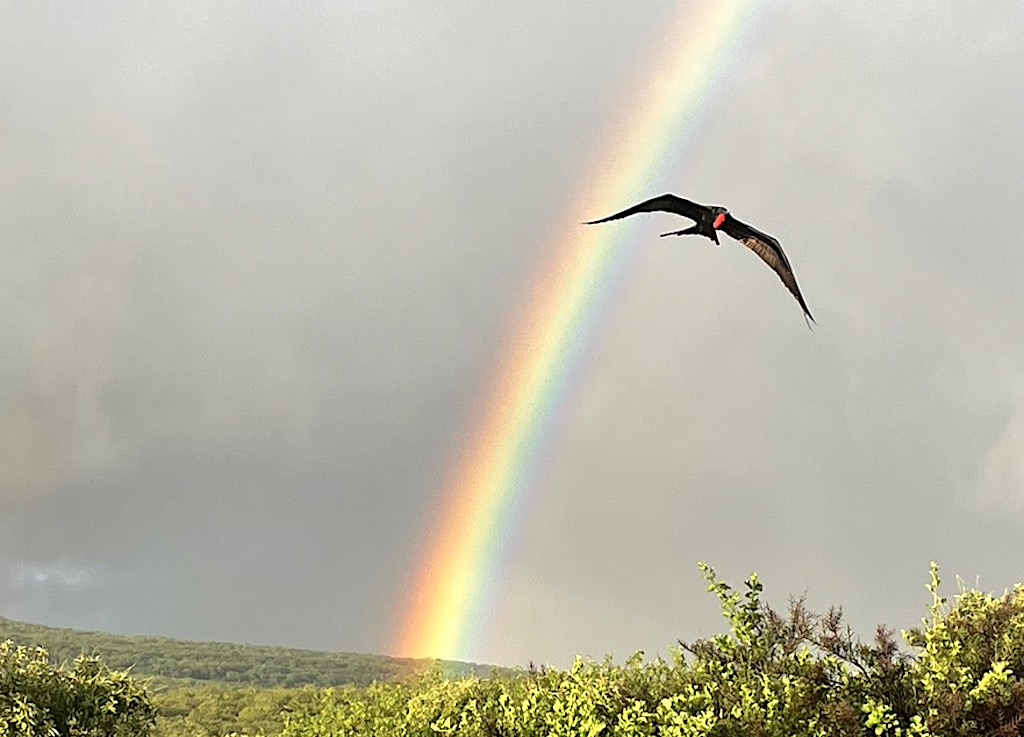
On the last morning of the cruise, we made a final excursion to Isla Lobos under an intense rainbow. Here, mating frigate birds inflated their red gulur pouches and glided gracefully overhead. Called “the pirates of the sea”, frigates occasionally rob other seabirds for food as they glide for weeks over the waves.

Gliding over the waves, each of our five days was packed full of striking volcanic island scenery, guided hikes, boat tours, underwater adventures, and close encounters with some of the world’s most interesting animal species. Staying land-based, we never would have reached all the remote and protected wildlife locations that we experienced cruising in the Galápagos.
Blogger’s Note: This is the second post in my two-part series from the Galápagos Islands. Unfortunately, due to space limitations, there were many more beautiful and interesting animal species in the Galápagos that we encountered and photographed that I did not include in the posts.
Feature photo: Kicker Rock at sunset from the fantail of the Archipel 1, with the flag of Ecuador flapping in the wind
 Month at a Time Travel
This is the type of place where you can only shake your head in wonder. It’s totally amazing.
LikeLiked by 1 person
Well said, Neil. In the final analysis, cruising in the Galápagos was superior to an independent land-based approach. Our daily schedules during the cruise were always full, with early morning wake-up calls, multiple activities throughout the day, and a 7:00 pm dinner bell. Needless to say, we were usually in bed before 9. Taking a longer cruise would have been great, but after keeping this up for five days, we felt like we saw enough wildlife for awhile.
LikeLiked by 1 person
Fantastic, what wonderful wildlife experiences you had on this tour Joe. We spent a terrific few hours observing (and photographing) frigate birds on an island off Panama earlier this year. Every creature sighting you’ve featured here sounds like a marvellous moment in its own right…together it must have made for a fantastic tour.
LikeLiked by 1 person
Welcome home, Phil & Michaela! All of our fellow passengers were delightful. Three of the couples were English. Their knowledge and interest in the various animal species was quite inspiring. Even though I introduced the frigates at the end of the post, they were fairly ubiquitous in the Galápagos, frequently gliding along with our vessel as we sailed between islands. Their wing structure and aerodynamics seem perfectly engineered for flight. I’m sure you snapped some amazing photos of them whilst in Panama.
LikeLiked by 1 person
Yes we did…one of our posts from Panama probably had too many words and too many pictures dedicated to them!
LikeLiked by 1 person
I went back and found your frigate bird pictures from Isla Iguana, Panama. You did get some incredible shots!
LikeLiked by 1 person
Thank you Joe….it was a good place to watch them.
LikeLiked by 1 person
What an amazing experience! The room on the boat looked very comfortable, and I can’t believe the animals and birds you saw…up close and personal. I can’t even imagine! And I really loved the birds with blue feet….when do you see that?
LikeLiked by 1 person
Our cabin was small but comfortable, despite the occasionally rough seas, Ann. Those adorable blue-footed boobies really won us over. The blue feet are so showy and their high-stepping mating dance was hysterical. Of all the wonderful wildlife encounters we experienced, the most memorable was snorkeling with the sea lion pups. As you will appreciate, they look and act like playful underwater dogs, with their svelte bodies, whiskered noses, and big brown eyes. When excited, they would race around us like puppies with the zoomies.
LikeLike
Honestly, I envy all of your trips! But if I could copy just one, it would be this one!!
LikeLiked by 1 person
Joe, like many scientists before you, it appears you were smitten with the Galapagos … and with good reason. It’s long been on our list, and I’m envious of your trip. You have some great photos and I’m sure you were thankful for digital instead of film with all the photo ops. I’m sure that this was a once-in-a-lifetime experience that will stay with you forever. Great post! ~James
LikeLiked by 1 person
It is wonderful to hear from you, James. I trust you and Terri are doing well and enjoying yourselves. As everyone (including Charles Darwin) knows, the biology of the Galápagos is world-renowned, but I found the geology of the islands almost as fascinating. Although the Galápagos have a total land mass about half of the Hawaiian Islands, their fixed mantle hot-spot tectonics and volcanic landforms are comparable. I thought it was interesting that the volcanic ash deposits that formed Kicker Rock and the arch erupted from a tuff cone, when hot magma came in contact with sea water. Thank goodness for iPhone digital photography. Not only is it versatile and convenient, but it captured all the images from our once-in-a-lifetime experience.
LikeLike
I didn’t know the Galapagos were another hot spot Joe. I’ll have to check it out. Thanks for the heads up.
LikeLiked by 1 person
Ooh, what fun! It must have been hard, trying to decide which pictures and stories to include.
I remember when looking at the Galapagos, the cruises looked compelling, but were considerably pricier than the land based packages. Hopefully, you got a break on your last minute booking.
Was scuba ever an option?
LikeLiked by 1 person
As I know you can relate, it did take a while to decide which of my hundreds of pictures to include in the post, Dave. We set up the last part of our trip, so that we could cancel our hotels, if we found a deal on a cruise. There are several travel agencies in Puerto Ayora that advertise last minute cruises. We spent a day negotiating with several of them. In the end, we found this five-day cruise at 60% of the list price. For us, even the discounted price was expensive, but we are glad that we splurged and did it. Many of the cruises offer scuba, and I hear the dives are amazing, but since we are not certified, we were satisfied with just snorkeling.
LikeLiked by 1 person
Good lord, Joe, you’ve outdone yourself with these photographs. Every single one of them are fantastic (especially those crabs — the colors!). A former co-worker lived for a time in Española and told many a colorful story about his life there. You’re seeing the area in the best way possible rather than flying from place to place. Thanks for sharing! – Marty
LikeLiked by 1 person
I am happy that you liked the crabs, Marty. Their colors are striking and their behavior is remarkable. They are extremely skittish, can sense the presence of danger, and evade capture better than Barry Sanders in his heyday. We were pleased to find this cruise at the last minute, and see the Galápagos from the land and from the boat. Even though there is a lot more to see and do, we felt satisfied with our overall experience. I really enjoyed reading your wife’s story this week. Now, don’t you have a sauce simmering on the stove?
LikeLiked by 1 person